The Foraging Habits of American Robins (Turdus migratorius) and Eastern Grey Squirrels (Sciurus carolinensis) in Areas of Varying Traffic Conditions Throughout the Juniata College Campus
- Authors
-
- Keywords:
- Birds, Squirrels, Foraging, Habitat, Campus, Peace Chapel, Human impact
- Abstract
-
The effect of anthropogenic noise pollution on natural ecological systems and animals is a complex topic that is actively trying to be understood by scientists worldwide. In this experiment, it was hypothesized that if the activity of traffic and noise around a location decreased, the feeding occurrences observed of eastern gray squirrels and American robins would increase across the Juniata College Campus. To conduct this experiment, researchers counted feeding occurrences of squirrels and robins across three locations of various noise and traffic levels. It was found that the high foot traffic area had the most feeding occurrences of robins and squirrels. Surprisingly, no feeding observations were made in the forest area with no surrounding traffic or anthropogenic noise pollution. Given the amount of wildlife observed near traffic, this study supports the idea that more of an effort should be made to mitigate the negative effects this traffic has on the abundant wildlife species, such as through automobile collisions and habitat fragmentation. Therefore, these results also provide a sound foundation for the argument of increasing natural habitats for terrestrial and avian species across the Juniata College campus.
- ##plugins.themes.default.displayStats.downloads##
-
##plugins.themes.default.displayStats.noStats##
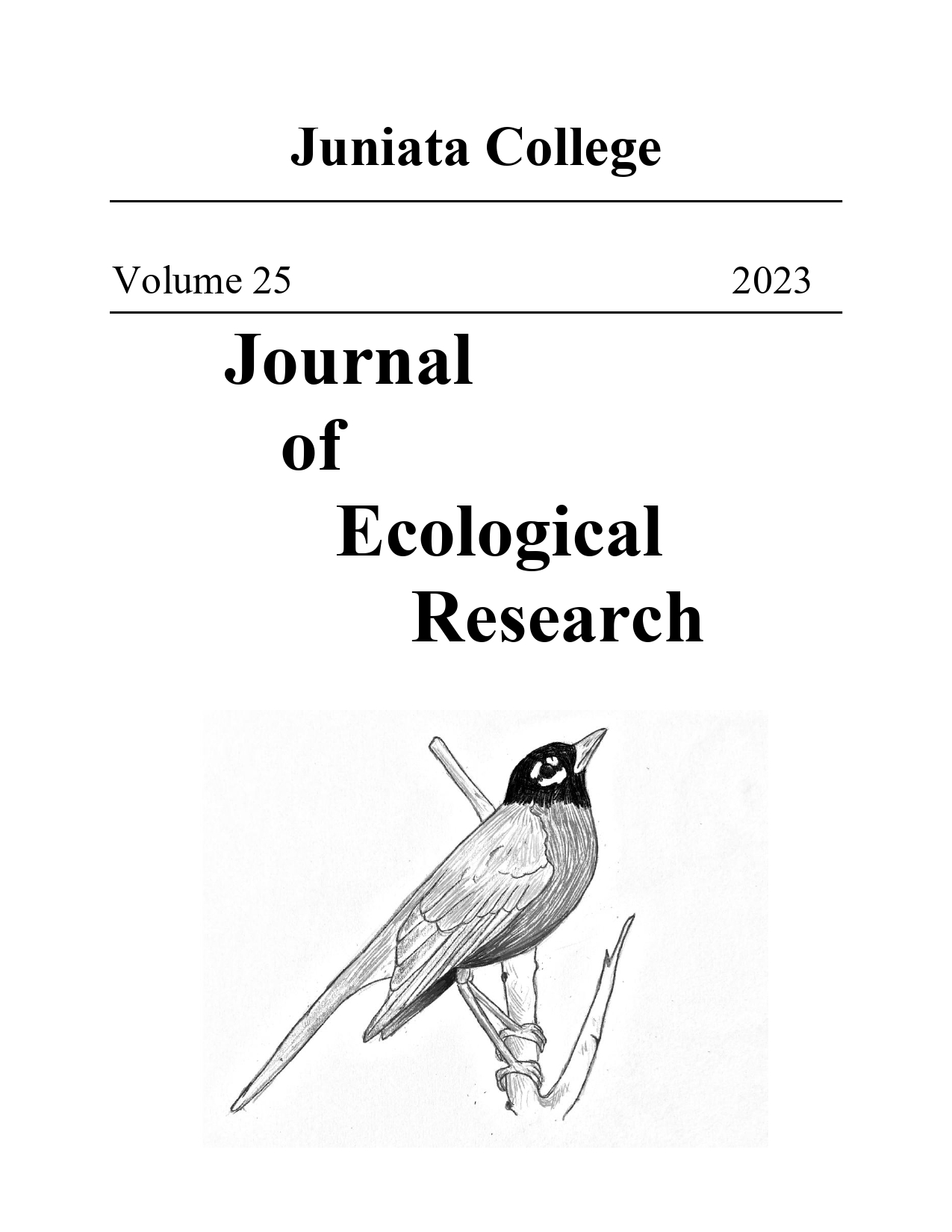
- Cover Image
-
- Downloads
- Published
- 2026-04-07
- Issue
- Vol. 25 (2023)
- Section
- Articles